

What is the difference between a down the hole drill and a rock drill?
The difference in working principles between down the hole drill and rock drill
Down the hole drilling: pre impact rock breaking technology
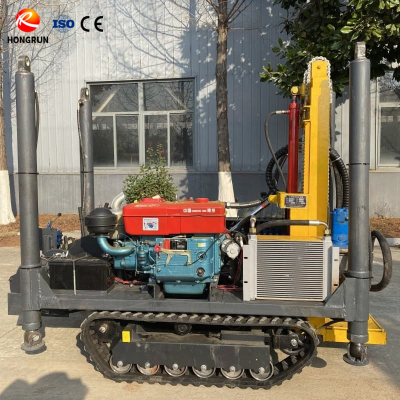
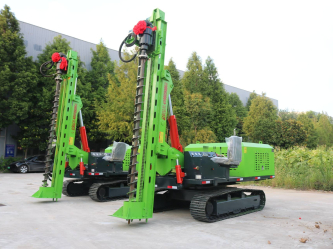
Down the hole drilling is a method of pre impact rock breaking, with the impactor installed at the bottom of the borehole. Compressed air causes the piston to reciprocate at high speed and impact the drill bit, quickly breaking the rock. When drilling, air can also blow out gravel and dust, keeping the hole clean and making drilling faster. Because the impactor is located at the bottom of the hole with minimal energy loss, it is particularly effective in drilling in hard rocks, such as granite and limestone, which can be easily handled. Therefore, it is widely used in mines, water wells, and large-scale projects.

Rock drill: rear impact transmission mode
Unlike down the hole drills, rock drills use a back impact transmission mode. In this system, the impact force is generated by the head of the rock drill and then transmitted step by step to the drill bit through the drill rod, thereby achieving the impact crushing of the rock.
The advantage of this structure is that the equipment volume is small, the structure is compact, and it has good maneuverability, so it is very common in construction environments that require frequent movement of equipment or short hole drilling. However, due to the fact that the impact force needs to be transmitted through the drill rod, energy will be lost during the transmission process. Therefore, in deep hole or large-diameter drilling operations, its efficiency is usually lower than that of down the hole drilling.
Rock drills are widely used in engineering fields such as mining blasting hole drilling, tunnel construction, and anchor hole construction, especially suitable for small diameter, high-frequency drilling operations.
Comparison of drilling diameter range
Borehole diameter range of down the hole drill
Down the hole drilling machines are commonly used for drilling medium to large diameters. The common diameter range of down the hole drill bits is generally:50 mm – 400 mm
The down the hole drilling rig is more suitable for the following engineering scenarios:
1. Drilling of water wells
2. Mining drilling
3. Quarry blasting holes
4. Construction of foundation engineering
5. Drilling holes for photovoltaic pile foundation
Range of rock drill hole diameter
In contrast, the drilling diameter of rock drills is usually smaller, typically in:38 mm – 90 mm
Rock drills are more suitable for the following application scenarios:
1. Mine blasting holes
2. Tunnel engineering drilling
3. Anchor hole construction
4. Small diameter rock drilling
Application scenarios of down the hole drills and rock drills
Different types of drilling equipment are suitable for different engineering requirements. Reasonable selection of equipment can significantly improve construction efficiency.
Common applications of down the hole drill:
1. Water well drilling project
2. Mining drilling operations
3. Construction of blasting holes in quarries
4. Drilling for foundation engineering
5. Drilling holes for photovoltaic foundation piles
Common applications of rock drills:
1. Mining blasting hole drilling
2. Tunnel construction drilling
3. Anchor hole construction
4. Small diameter rock drilling
(FAQ)
Q1: Which is more suitable for hard rock drilling, down the hole drill or rock drill?
If the formation is relatively hard, a down the hole drilling rig is usually used. Its impactor directly impacts the rock at the bottom of the hole, and the force is basically not lost in the drill rod, so the efficiency is higher when hitting hard rocks, and drilling is faster and easier.
Q2: Why do many blasting holes in mines use rock drills?
The diameter of blasting holes in mines is usually smaller, in which case rock drills are more suitable. It has the characteristics of small size, flexible operation, and fast drilling speed, so it is widely used in mining blasting construction.
Q3: Does a down the hole drilling rig necessarily require an air compressor?
Generally speaking, this is necessary. The air compressor provides compressed air to drive the downhole impactor, while blowing rock powder and gravel out of the hole, making the drilling process smoother.