

What is the function of pile driver?
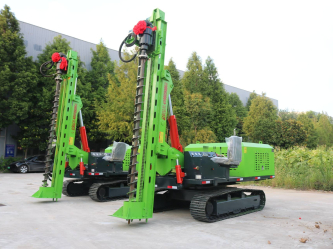
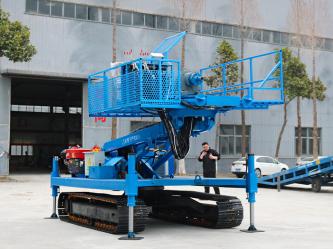
PV Mounting Pile Driver is a key equipment used to drive pile foundations deep underground and provide reliable foundations for engineering projects.
1. Core function: Deep bearing and stability
The Pile Driver Machine transmits the weight of the building above to the deep and hard strata by pressing steel piles, concrete piles, or wooden piles into a stable soil layer. The bearing methods of piles are generally divided into two categories:
(1) End bearing piles mainly rely on the bottom of the pile to bear the load of the building on solid soil or rock.
(2) Friction piles mainly rely on the frictional force between the surface of the pile body and the surrounding soil to share the load.

2. Main functions and advantages of PV Pile Driver:
(1) Improve bearing capacity: Provide stable and reliable vertical and lateral support foundations for high-rise buildings and bridges and other structures.
(2) Reduce settlement: It can reduce the risk of uneven settlement and cracking of the foundation.
(3) Improving foundation conditions: During pile driving, the surrounding soil layers will be squeezed tighter, making the foundation more stable.
(4) Resistance to pulling force and overturning: Suitable for structures such as transmission towers and wind turbines, it can prevent being pulled up or knocked down by wind force.
3. Working principle (basic process) of pile driver:
This process is similar to nailing a nail into wood:
Positioning pile: Lift the prefabricated pile (steel pile, concrete pile, or wooden pile) and place it vertically in the designated position.
Positioning Hammer Head: Move the hammer head device of the pile driver directly above the pile.
Strike pile: Release or activate the hammer head to create a strong impact on the top of the pile. This impact force drives the pile deeper into the ground.
Repetition: Repeat the process of lifting and releasing the hammer until the pile reaches the required depth or "penetration" - that is, the sinking of each pile strike becomes extremely small, indicating that it has reached sufficient bearing capacity.
4.Characteristics of Crawler Pile Driver:
(1) High construction efficiency: driven by hydraulic or vibration, precise positioning, and combined with GPS/laser, pile driving can be quickly completed.
(2) Stable performance: Solar Piling Rigs are adaptable to various geological environments and resistant to shock and pressure.
(3) Intelligent operation: The tracked chassis adapts to complex terrain and has automatic leveling and construction data recording functions.
(4) Solar Piling Rigs are widely used in various fields such as construction, municipal engineering, bridges, new energy, and communication. New energy models can also reduce noise and emissions.

5.Common application scenarios of PV Pile Driver:
(1) High rise buildings, bridges, ports and other foundation projects;
(2) Dams, retaining walls, and various flood control facilities;
(3) The support foundation of the photovoltaic power station (solar pile driver);
(4) Wind turbine towers, transmission line towers, and industrial equipment foundations.
Summary:
The mission of PV Mounting Pile Driver is to lay a solid foundation for various engineering projects, ensuring their safety, stability, and reliability during long-term use.
FAQ:
1. Q: What are the main types of Photovoltaic Pile Driver?
A: Main types include: Impact (e.g., Diesel Hammer, Hydraulic Hammer), Vibration (Vibratory Hammer), Static (Hydraulic Press-in), and Auger (Piling Rig).
2. Q: What to consider when choosing a pile driver?
A: Key factors are: Soil conditions, pile type & size, project requirements (depth, bearing capacity), and site environment (noise/vibration restrictions).
3. Q: How to perform daily maintenance?
(1)Daily: Check fluids (oil, hydraulic fluid, fuel, coolant); inspect for structural cracks; clean the machine.
(2)Periodically: Replace filters and hydraulic oil per schedule; tighten all bolts; lubricate and inspect wire ropes.