

Water Well Drilling for Agriculture and Irrigation
Professional water well drilling rig can be used for underground water well and drilling construction, and can complete drilling operations according to different geological conditions. According to the drilling depth, aperture, formation conditions, movement requirements, and power configuration of the project, users can choose from borehole drilling machine, water drilling machine, or hydraulic well drilling rig.

For agricultural engineering contractors, irrigation engineering companies, and professional drilling service providers, choosing the appropriate well drilling equipment can directly affect construction efficiency, operating costs, and project duration.
What is a water well drilling rig?
Water well drilling rig is a specialized engineering equipment used for underground drilling construction and obtaining groundwater resources. Modern water well drilling rigs can adopt various drilling methods such as rotary drilling, air drilling, and down the hole hammer drilling according to different geological conditions.
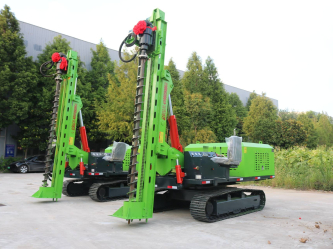
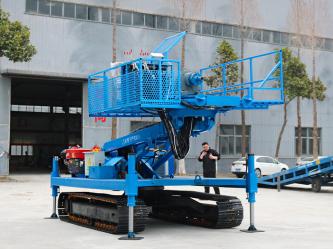
A complete water well drilling machine typically includes a power system, hydraulic system, drilling rig, rotary mechanism, track or wheel chassis, drilling tools, and control system. According to the specific model, mud pumps, air compressors, drill pipes, and other auxiliary drilling tools can also be equipped.
For users who need to move between multiple farms or construction sites, tracked water drilling rigs have good passability and stability; Wheeled models are more suitable for road transportation and frequent transfer projects.
Main characteristics of water well drilling equipment
Strong drilling capability
Agricultural water wells may need to pass through soil layers, clay, gravel layers, weathered rocks, and harder rock layers. Therefore, a well drilling machine with a reasonable configuration needs to have sufficient rotational torque and propulsion force to ensure stable drilling process.
According to different drilling depths and formation conditions, different engines, hydraulic systems, and drilling tools can be matched to enable water well drilling equipment to adapt to different types of groundwater well construction.
Flexible drilling depth and aperture
Different agricultural projects have different requirements for the depth and aperture of water wells. Some agricultural irrigation projects only require the construction of shallow water wells, while in some areas, deeper boreholes need to be drilled to obtain stable groundwater sources.
A professional borehole drilling machine can replace different specifications of drill bits, drill rods, and drilling tools according to the aperture and geological conditions, thus meeting the different needs of small farms to large-scale irrigation projects.
Crawler or wheeled mobile structure
Mobility is also one of the key factors to consider when purchasing well drilling equipment for sale. Agricultural drilling engineering is usually distributed in larger areas, and equipment may need to be transferred between farmland, orchards, roads, and uneven ground.
The tracked water well drilling rigs for sale have good grip and are suitable for soft soil, muddy ground, slopes, and complex agricultural environments. Wheeled water well drilling rigs are more suitable for road transportation and projects that require frequent transitions.
Hydraulic control system
Modern water drilling machines commonly use hydraulic systems to control rotation, propulsion, drilling rig lifting, and other working actions. Hydraulic control can make equipment operate more smoothly and facilitate operators to adjust drilling parameters according to different geological formations.
For professional drilling contractors, this control method can enhance operational flexibility during continuous drilling processes and improve overall construction efficiency.
The main application scenarios of water well drilling rig
agricultural irrigation
Agricultural irrigation is one of the most common application areas of water well drilling rig. By constructing groundwater wells, water sources can be provided for farmland, orchards, vegetable planting bases, greenhouses, and other agricultural production areas.
For large-scale irrigation projects, it may be necessary to construct multiple water wells in different agricultural areas. Mobile well drilling rig can be transferred between multiple construction sites, improving equipment utilization.
Livestock breeding and farm water supply
Farms and livestock farms require a large amount of stable water resources for livestock drinking, equipment cleaning, and daily production. Water well drilling machines can be used for groundwater development in dairy farms, livestock farms, ranches, and other agricultural facilities.
Rural and remote areas
Some remote areas lack complete municipal water supply facilities. Using a borehole drilling machine, independent groundwater sources can be developed to provide water supply conditions for rural areas, farms, camps, and remote communities.
Greenhouse and Horticultural Planting
Greenhouse agriculture and high-intensity horticultural planting require high stability of irrigation water sources. Reasonably configured water drilling rig can be used for groundwater development, providing a stable water source for automatic irrigation systems.
Advantages of choosing professional water well drilling equipment
The core advantage of professional water well drilling equipment lies in its ability to balance drilling performance, mobility, and construction flexibility.
Firstly, the equipment can be configured for different geological conditions; Secondly, tracked or wheeled chassis can meet the transition requirements in different construction environments; Thirdly, the hydraulic system can provide more precise control over drilling operations; In addition, different drilling tools and drilling methods can be matched according to engineering requirements.
For overseas buyers looking for well drilling equipment for sale, they should not only focus on the initial price of the equipment, but also consider engine power, drilling depth, hole diameter, drilling method, chassis structure, air compressor requirements, drilling tools, spare parts, and after-sales service comprehensively.
Therefore, the price of water drilling machines will be significantly affected by equipment configuration and project requirements. It is better for buyers to provide detailed engineering parameters when inquiring, rather than simply comparing the prices of basic models.
Manufacturing process of water well drilling rig
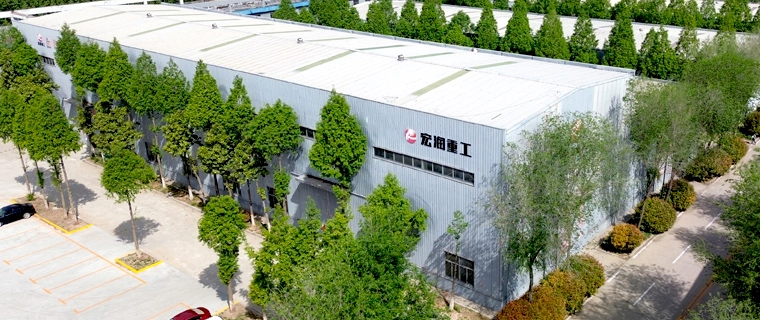
The manufacturing of professional water well drilling machines usually includes steel structure processing, main component assembly, hydraulic system installation, electrical system connection, drilling system installation, and whole machine testing.
During the factory production process, the equipment body and drill frame are processed and manufactured according to the engineering drawings, and then the engine, hydraulic pump, hydraulic motor, control system, and transmission components are installed.
After the complete assembly of the machine, the water well drilling equipment needs to undergo comprehensive testing, including hydraulic pressure, rotary action, propulsion action, drilling frame lifting, walking system, and control system.
For export customers, factory testing is particularly important. Through complete factory testing, the operational status of the equipment can be checked in advance to ensure that the water well drilling rig can be smoothly installed and used after transportation to the customer's site.
How to choose a suitable water well drilling rig?
Before purchasing water well drilling equipment for sale, it is recommended that buyers provide the following project parameters:
1. Required drilling depth
The drilling depth will affect the engine power, drilling rig structure, drill pipe configuration, and hydraulic system capacity.
2. Geological conditions
Different drilling methods and tools need to be matched for different strata such as soil layers, clay, sand layers, gravel, limestone, and hard rocks.
3. Required aperture
The target aperture will directly affect the configuration of the drill bit, drill pipe, casing, and the entire drilling system.
4. Construction environment
If the construction site is located in farmland, mountainous areas, muddy ground, or complex terrain, tracked equipment is usually more suitable; If the project is close to the highway and requires frequent transportation, wheeled models are more convenient.
5. Budget and long-term usage costs
When comparing the prices of water drilling machines, long-term expenses such as fuel consumption, maintenance costs, drilling tools, spare parts, transportation, and after-sales service should also be considered.