

What Should You Consider When Choosing a Solar Pile Driver?
In the construction process of photovoltaic power plants, pile driving construction is often one of the first steps. The speed and accuracy of pile foundation installation not only affect the construction quality, but also affect the overall progress of subsequent support installation and component laying. Therefore, choosing the appropriate solar pile driving equipment is a crucial step in ensuring the efficient progress of the project.
There are more and more types of photovoltaic pile driving equipment on the market, but the higher the power and price, the more suitable it is for one's project. When choosing a Solar Pile Driver, it is recommended to focus on the following aspects.
1.Construction geological conditions
The geological environment varies greatly in different regions. Some projects are located in desert areas with soft soil layers; Some are built in mountainous areas or areas with more gravel, making the construction difficulty significantly higher.
Before selecting equipment, it is necessary to first understand the soil hardness, stone content, and pile foundation design requirements on site. If the Solar Pile Driver does not match the geological conditions, it will not only affect construction efficiency, but may also increase equipment wear and maintenance costs.
2.Does the pile driving efficiency meet the project requirements
For large ground-based photovoltaic power plants, the construction period is usually tight. The number of piles that solar pile driving equipment can complete per day directly affects the overall construction progress.
In addition to paying attention to engine power, it is also necessary to understand the equipment's impact capability, applicable pile length, and continuous operation performance. Experienced construction teams usually place more emphasis on the stable performance of equipment under actual working conditions, rather than just the data on the parameter table.

3.The passability and adaptability of Solar Pile Driver
Many photovoltaic projects are built in areas with complex terrain, such as hills, Gobi, or deserts. At this point, whether the equipment can smoothly enter the construction area is equally important.
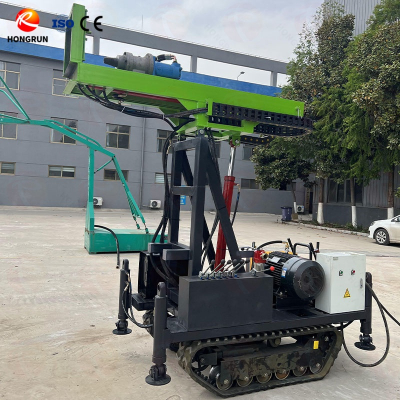
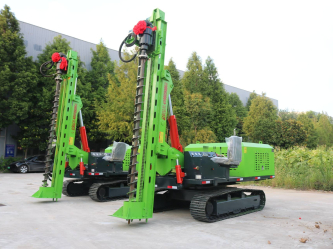
Crawler type photovoltaic pile drivers usually have good grip and stability, and their performance is more reliable on slopes or soft ground. For projects that require frequent transitions, the efficiency of equipment movement is also worth considering.
4.Is the operation simple
As the scale of photovoltaic projects continues to expand, construction efficiency increasingly relies on the intelligence level of solar pile driving equipment itself.
A pile driver with automatic leveling, hydraulic adjustment, and precise positioning functions can help operators complete pile position construction faster and reduce repetitive adjustment time. At the same time, it also helps to improve the verticality of the pile and reduce subsequent installation errors.
5.After sales service is equally important
The procurement of Solar Pile Driver is not only a one-time investment, but also crucial for later maintenance and technical support.
For projects with longer cycles, once equipment malfunctions, the losses caused by downtime are often much higher than the maintenance costs. Therefore, when selecting equipment, in addition to price factors, the focus should also be on whether the supplier can provide fast parts supply and reliable technical support.

6.Taking into account the overall cost input
Many customers first pay attention to the price of Solar Piling Machines when purchasing, but in reality, operating costs, maintenance expenses, and construction efficiency can also affect the final revenue.
A Solar Piling Machine with stable performance and low failure rate, although the initial investment may be higher, can often help the project save more time and labor costs in the long run.
There is no unified standard for choosing Solar Piling Machine, the key is whether the equipment meets the actual needs of the project. The construction environment, geological conditions, construction scale, and subsequent service capabilities should all be included in the scope of evaluation. Only by fully understanding these factors before making a decision can we find a truly suitable solution for the project, improve the efficiency of photovoltaic power plant construction, and reduce overall construction costs.