

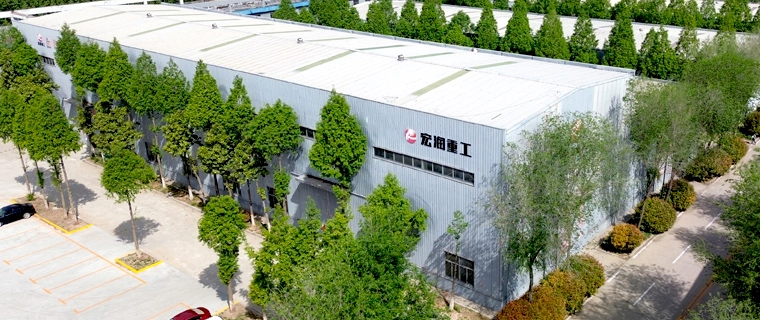
Shandong Hongrun Group (China) Co., Ltd. is located in Jining, Shandong, China, the hometown of Confucius. We are a comprehensive industry and trade integrated enterprise that values quality and reputation.

The crawler DTH drilling rig is one of the most widely used machines in modern mining, quarrying, and construction industries. Combining mobility, stability, and deep drilling efficiency, this equipment plays a crucial role in rock excavation, foundation work, and geothermal projects.
With rapid infrastructure expansion and increasing demand for energy exploration, the global market for crawler DTH drilling rigs has grown significantly in recent years. This article provides an in-depth analysis of market trends, key technologies, and buyer considerations to help importers and distributors understand the future direction of this essential drilling equipment.
The crawler DTH drilling rig is one of the most widely used machines in modern mining, quarrying, and construction industries. Combining mobility, stability, and deep drilling efficiency, this equipment plays a crucial role in rock excavation, foundation work, and geothermal projects.
With rapid infrastructure expansion and increasing demand for energy exploration, the global market for crawler DTH drilling rigs has grown significantly in recent years. This article provides an in-depth analysis of market trends, key technologies, and buyer considerations to help importers and distributors understand the future direction of this essential drilling equipment.
According to market research data, the global drilling rig industry surpassed USD 6 billion in 2024, with crawler-mounted DTH rigs representing a fast-growing segment. Growth is driven primarily by:
Infrastructure projects: Road construction, tunneling, and bridge foundation drilling.
Mining operations: Open-pit and underground mineral extraction.
Geotechnical applications: Ground reinforcement, geothermal wells, and water exploration.
In developing regions such as Southeast Asia, Africa, and South America, rising investment in mineral resources and infrastructure has fueled the demand for crawler DTH drilling rigs offering efficient penetration in hard rock formations.
The Asia-Pacific region currently dominates production and consumption, accounting for over 40% of global sales. However, increasing mechanization in Africa and the Middle East is expected to accelerate regional adoption. Europe and North America continue to lead in technical innovation, focusing on automation and eco-efficiency.
“DTH” stands for Down-The-Hole, a drilling method where the hammer is located directly behind the drill bit. The impact energy is transmitted directly to the rock, minimizing energy loss and allowing precise, deep, and efficient drilling.
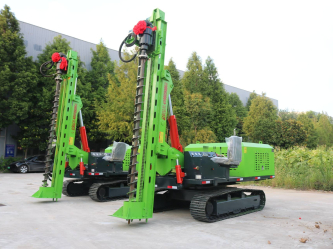
A typical crawler DTH drilling rig includes:
Crawler chassis: Ensures stable movement on uneven terrain.
Hydraulic system: Powers the drilling operations and rotary functions.
Drilling arm and feed system: Controls the drill pipe’s penetration and alignment.
DTH hammer and bit: Executes the actual drilling impact through compressed air.
Air compressor unit: Provides the required air pressure for DTH operation.
This integrated system allows the rig to achieve greater penetration rates, lower energy consumption, and improved reliability in harsh environments.
Modern crawler DTH drilling rigs are equipped with intelligent control interfaces that monitor drilling depth, air pressure, and hammer frequency in real time. These automation systems enhance safety, accuracy, and productivity — especially for deep or angled drilling.
Manufacturers are integrating energy-saving hydraulic circuits, variable air compressors, and dust suppression systems to reduce fuel consumption and emissions. This aligns with global environmental regulations and green construction practices.
Crawler-mounted structures provide superior traction and adaptability on rough terrains such as quarries or mountainous regions. Advanced suspension systems and compact design make these rigs ideal for confined or uneven work sites.
High-strength steel frames, wear-resistant drill rods, and advanced sealing technologies extend the service life of crawler DTH drilling rigs and minimize maintenance costs — critical factors for operators and importers evaluating long-term ROI.
Producing a reliable crawler DTH drilling rig involves multiple precision-controlled stages:
Material preparation: Using certified high-tensile steel and corrosion-resistant alloys.
Component machining: CNC systems ensure dimensional accuracy of key parts like cylinders, spindles, and bearings.
Assembly: Hydraulic systems, air pipelines, and electrical controls are assembled under strict supervision.
Testing: Each rig undergoes pressure, vibration, and drilling performance tests to meet international standards.
Surface treatment and packaging: Anti-rust coating and customized shipping protection ensure reliability upon delivery.
This comprehensive process ensures consistency, durability, and compliance with ISO and CE safety standards.
Crawler DTH rigs are used in a wide range of operations, including:
Mining and quarrying: Drilling blast holes in hard rock or granite.
Construction engineering: Foundation piling, slope stabilization, and anchoring.
Water well drilling: Efficient deep drilling with high precision.
Geothermal and energy projects: Borehole creation for heat exchange systems.
Their adaptability makes them essential for companies seeking versatile, high-output drilling solutions.
Buyers increasingly prioritize rigs offering automated lubrication, digital depth control, and remote diagnostics. Safety standards and operator comfort are also major procurement criteria.
Many manufacturers now offer OEM/ODM customization, allowing buyers to tailor rig configurations, color schemes, and logos based on local market preferences.
Integration with IoT-based monitoring enables predictive maintenance alerts, reducing downtime and extending machine life — a trend expected to dominate future equipment sourcing.
Crawler rigs offer superior mobility on uneven terrain and are better suited for mining, quarrying, and complex geological conditions.
Depending on the model and air compressor capacity, most rigs can achieve drilling depths between 30 and 200 meters.
Routine inspection of hydraulic lines, air pressure systems, and hammer lubrication ensures stable operation and extends equipment life.
Yes. With proper configuration of air compressors and temperature-resistant components, crawler DTH rigs perform reliably in cold, hot, or high-altitude environments.
The crawler DTH drilling rig market is set to evolve with the integration of electric drive systems, automation technologies, and smart monitoring software. As sustainability becomes a key industry focus, energy-efficient designs and modular construction will define the next generation of rigs.
For international buyers, collaboration with experienced OEM manufacturers will be essential to ensure high-quality supply, after-sales support, and compliance with evolving industry standards.
As global mining and infrastructure development accelerate, the crawler DTH drilling rig remains a cornerstone of efficient, precise, and cost-effective drilling operations. Combining advanced technology, robust structure, and adaptability, it continues to be the preferred choice for industrial projects worldwide.
We provide professional-grade crawler DTH drilling rigs tailored to international buyers’ requirements. Contact us today for detailed specifications, OEM customization options, and export solutions that meet your project needs.


Small DTH Drilling Rig Applications and Customization
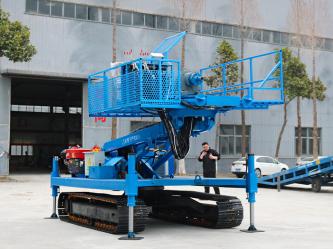
The four-cylinder DTH drilling rig is suitable for a wide range of applications, including water conservancy projects, geological exploration, building foundations, and mineral extraction. We offer customized configurations tailored to your specific project requirements.